A Journalist's Notebook

Papamokes

Forty years on the needle.
A cast of legends. A lifetime of stories.
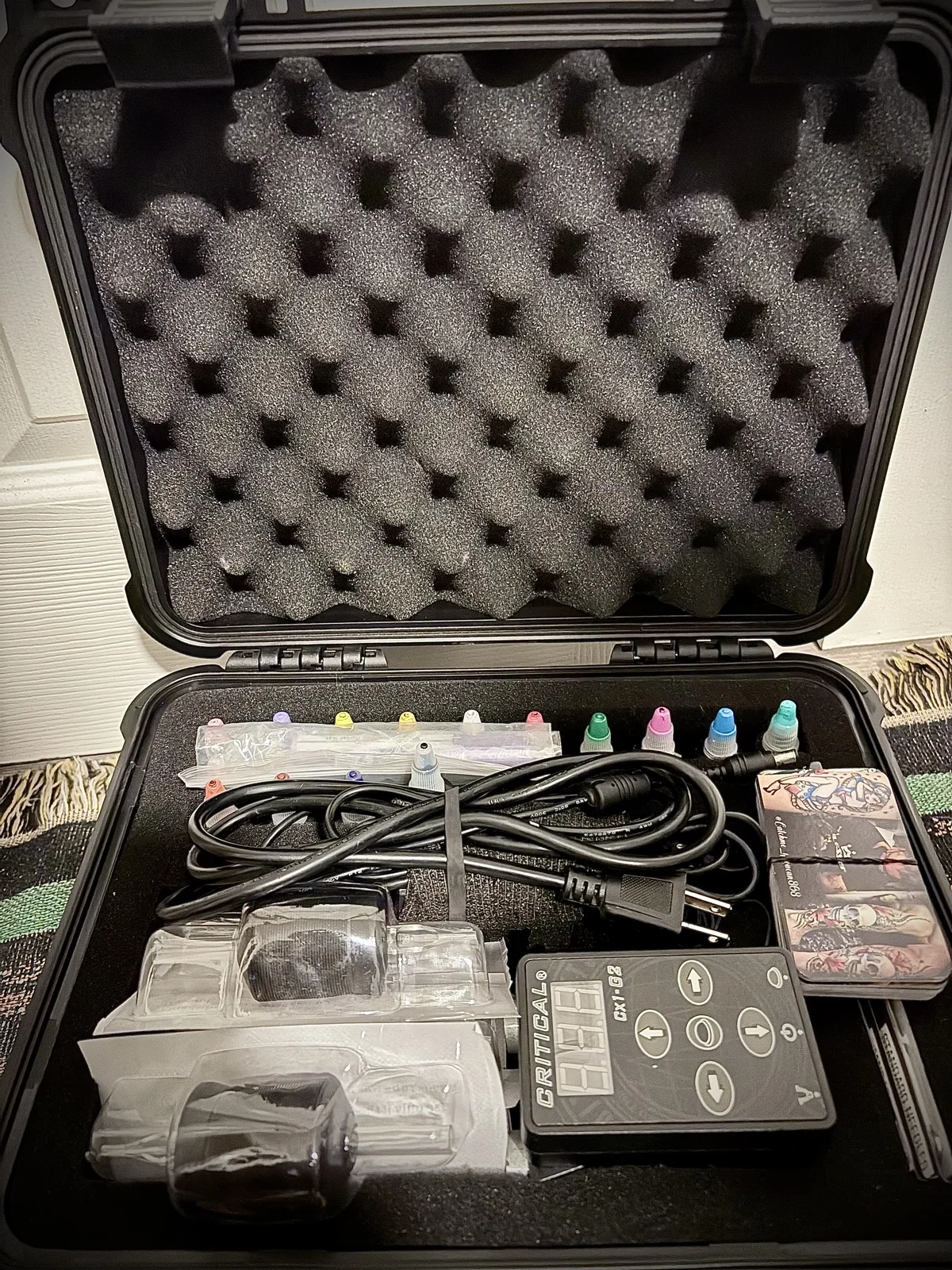
Some men carry a briefcase. Papamokes carries a Pelican case.

A Note From the Author

The Pelican Case.

Most people in this business carry a briefcase. A leather one if they care about appearances, a vinyl portfolio if they don't. Kevin Mokuahi shows up with a Pelican case. The kind made for divers, photographers, and people who need to know — without a second of doubt — that whatever is inside is going to outlast whatever weather walks in with them.

It's the small thing about him, the kind of small thing you notice once and then can't stop noticing. The Pelican case. The good-morning texts. The way he looks at a piece of skin and sees thirty years into the future of that skin. The way he tells you about a man he tattooed twenty years ago like the man is sitting at the next table. Kevin Mokuahi is a working legend in the Hawaii tattoo industry. And what makes him a legend — what I've come to understand running TNT Tattoo and watching him work — is not that he tattooed Britney Spears or Cher or rode a bicycle up Haleakala with Parkinson's, although he has done all three. It's that you can't sit next to him for ten minutes without leaving a better human.

I've been around this trade long enough to know the difference between a tattooer with a résumé and a tattooer with a life. Kevin is the second kind. This piece is my attempt — written for the website his son and our shop family put together for him — to give you a glimpse of what that life looks like up close.

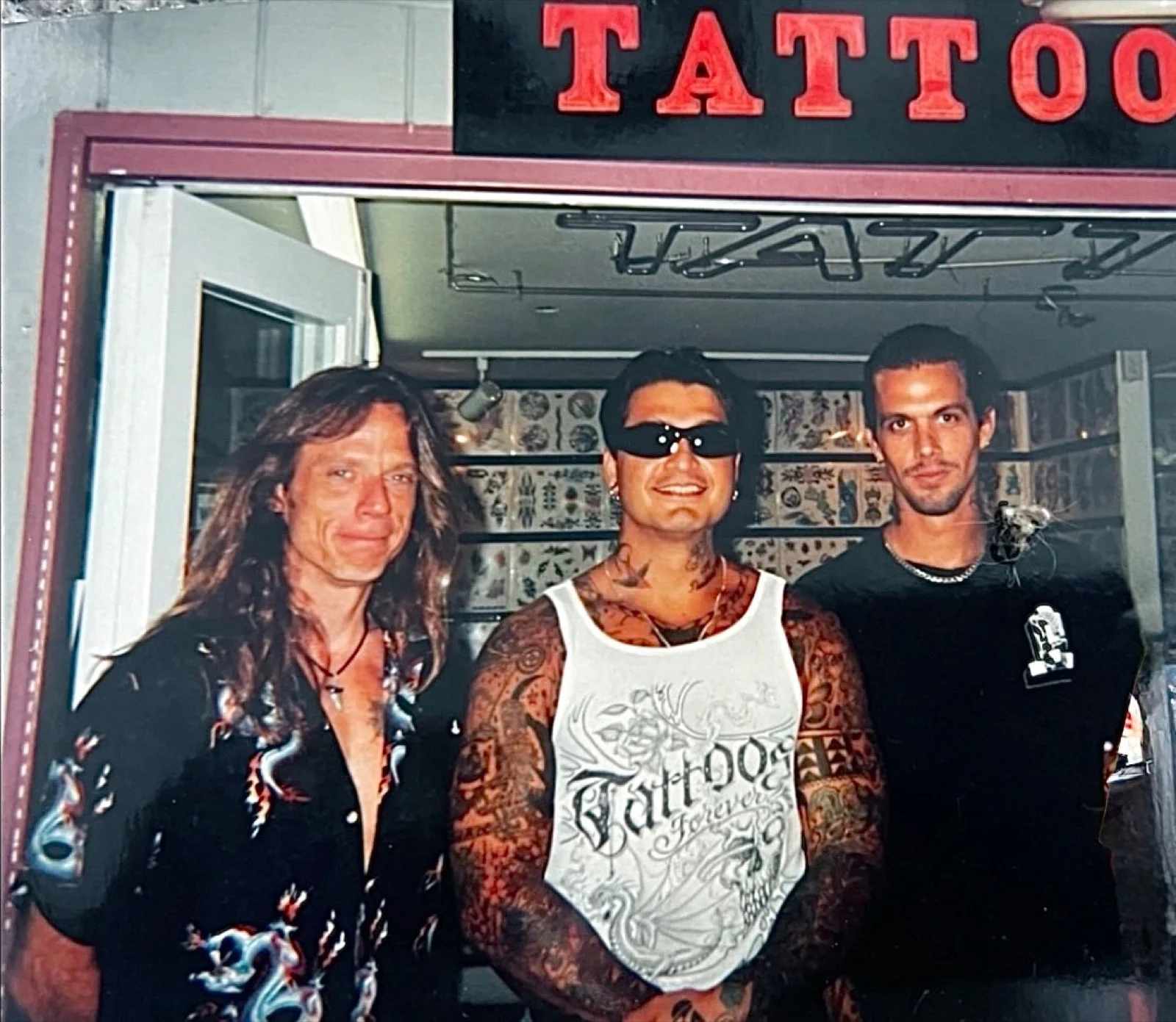
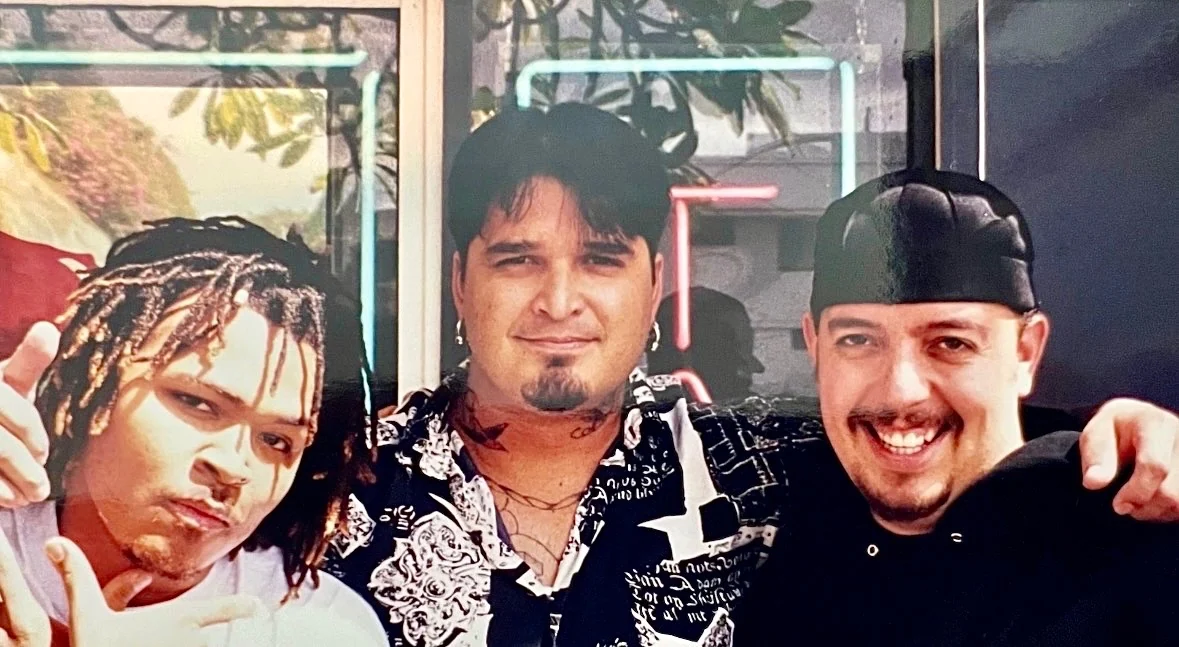
Kevin Mokuahi (a.k.a. Papamokes) standing in front of Steel Bamboo Tattoo in downtown Waikiki with Buttons Kaluhiokalani — Pelican case in hand
Kevin and the late Buttons Kaluhiokalani in front of Steel Bamboo Tattoo, downtown Waikiki. The Pelican case is in his hand. The smile is genuine. The decade is unmistakable.
Chapter One

The cast of legends.

You don't tattoo on Oʻahu for forty years without becoming entangled with everyone else who matters. Kevin's appointment book reads like a Hawaii cultural index. Look at the photographs in his archive and the same theme keeps repeating — Kevin in the middle, somebody important on his left, somebody important on his right, all of them grinning like the photo is for the wall and not for the magazine.

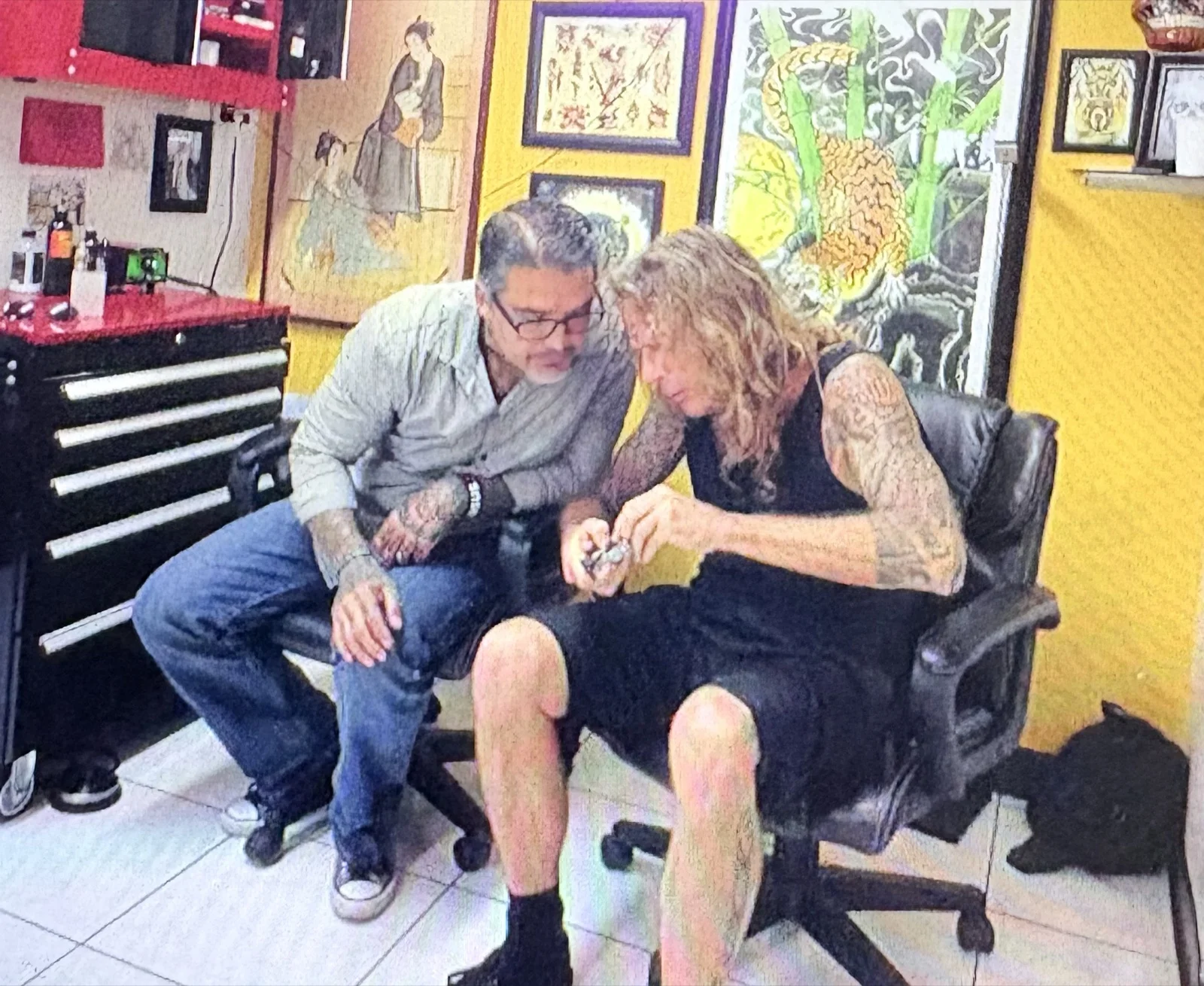
Kevin Mokuahi and Mike Hatfield — two legends in the Hawaii tattoo industry
Kevin Mokuahi and Mike Hatfield. Two legends in the Hawaii tattoo industry — the kind of friendship that built the modern Honolulu scene.
Mike Hatfield, Kevin Mokuahi, and Mark Claunch — the original Aloha Tattoo upstairs from what would later become Sacred Art
Mike Hatfield, Kevin Mokuahi, Mark Claunch at the original Aloha Tattoo — upstairs from where Sacred Art is located today. Half the names that built modern Waikiki tattooing came through that doorway.

That's the thing about Kevin: the rooms he's been in. The shop fronts he's stood in front of. Before TNT in Aiea where he is now part of our family — before Sacred Art Waikiki where he's been a fixture for years — there was Steel Bamboo Tattoo in downtown Waikiki. The original Aloha Tattoo upstairs. South Pacific Tattoos. Hale Nui on Kūhiō Avenue. He worked them all. He outlasted most of them. The buildings change. The names on the awnings change. Kevin keeps tattooing.

The clients in his archive run the same range. Look through the pictures:

Kevin Mokuahi with Joey Fatone of NSYNC
Joey Fatone · NSYNC
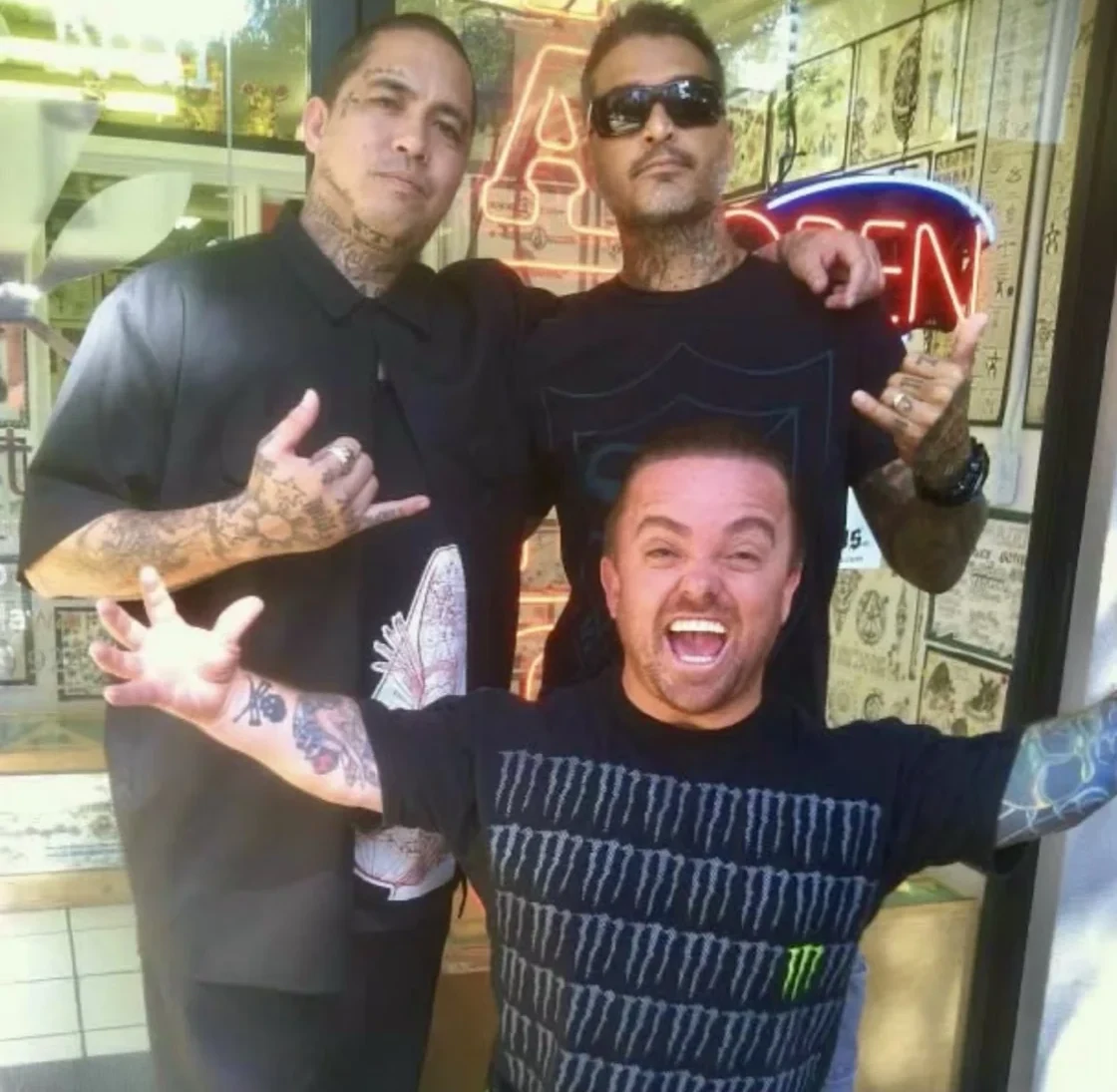
Wee Man, Big Island Mike, and Kevin Mokuahi
Wee Man, Big Island Mike, Kevin
Kevin Mokuahi with Kanoa McGee
Kanoa McGee
Kevin Mokuahi with Johnny Boy Gomes
Johnny Boy Gomes

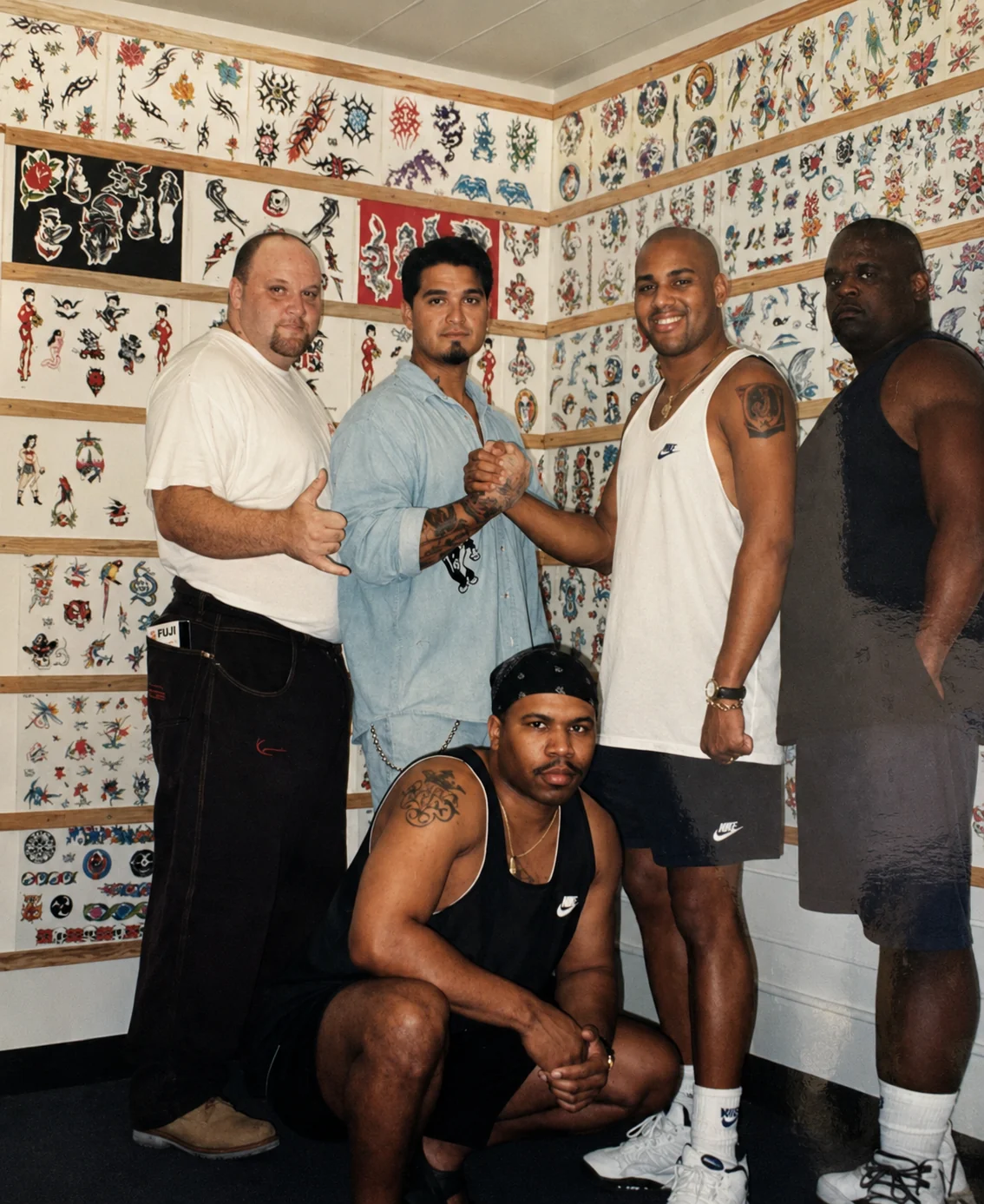
Then there are the names you've heard in the trade itself — Sunny Garcia, Matt Archibald, the late Buttons Kaluhiokalani, Augie T, his nephew Shawn Mokuahi, the Suluʻape brothers, Marcus Luttrell, Sugar Ray's Mark McGrath, the Boo-Yaa T.R.I.B.E. The kind of list that, if you put it on a wall and pointed at it, would sound like bragging. Kevin doesn't point. Half the names you only learn because somebody else in the shop tells you, and Kevin shrugs and changes the subject.

Kevin doesn't tell you about the famous people. The famous people tell you about Kevin.
Chapter Two

The story that says everything.

Here's the story I keep going back to. It happened in our shop, at TNT in Aiea, not long after Kevin started spending more time on our bench.

I got a message one afternoon — a woman writing in to say she was coming back to Oʻahu on vacation. She'd gotten her first tattoo in Hawaii almost twenty years ago. She still had the photo. She wanted to know if the artist who did it was still around. She wanted her second tattoo from him.

I walked into the shop and showed the picture around. Nobody recognized the guy in it. Twenty-year-old photograph, grainy phone forward, a younger man with darker hair and a different shirt. The artists looked at it and shook their heads. Don't know him. Was he ever here?

Then Kevin came in. Looked over my shoulder at the screen. Squinted.

"That's me. Can't you tell?" — Kevin Mokuahi, holding a 20-year-old photo of himself

He laughed about it. Of course he did. Two decades of life will rearrange any of us. But the woman remembered. She'd carried the memory of that first sitting with her across twenty years and one entire lifetime. When she flew back, she came in and sat down in Kevin's chair again. And he gave her her second tattoo.

Appearances change. Times change. The story doesn't. That's the thing about Kevin I keep telling people: it's not the ink that stays with you. It's the way he treats you on the way to the ink. People remember. Twenty years later they still remember. That isn't a marketing slogan. That isn't a thing he learned at a convention. That's a man's posture toward the people in his chair, and he has carried it longer than most of us have carried our adult names.

Archive

"We worked hard to get to where we're at."

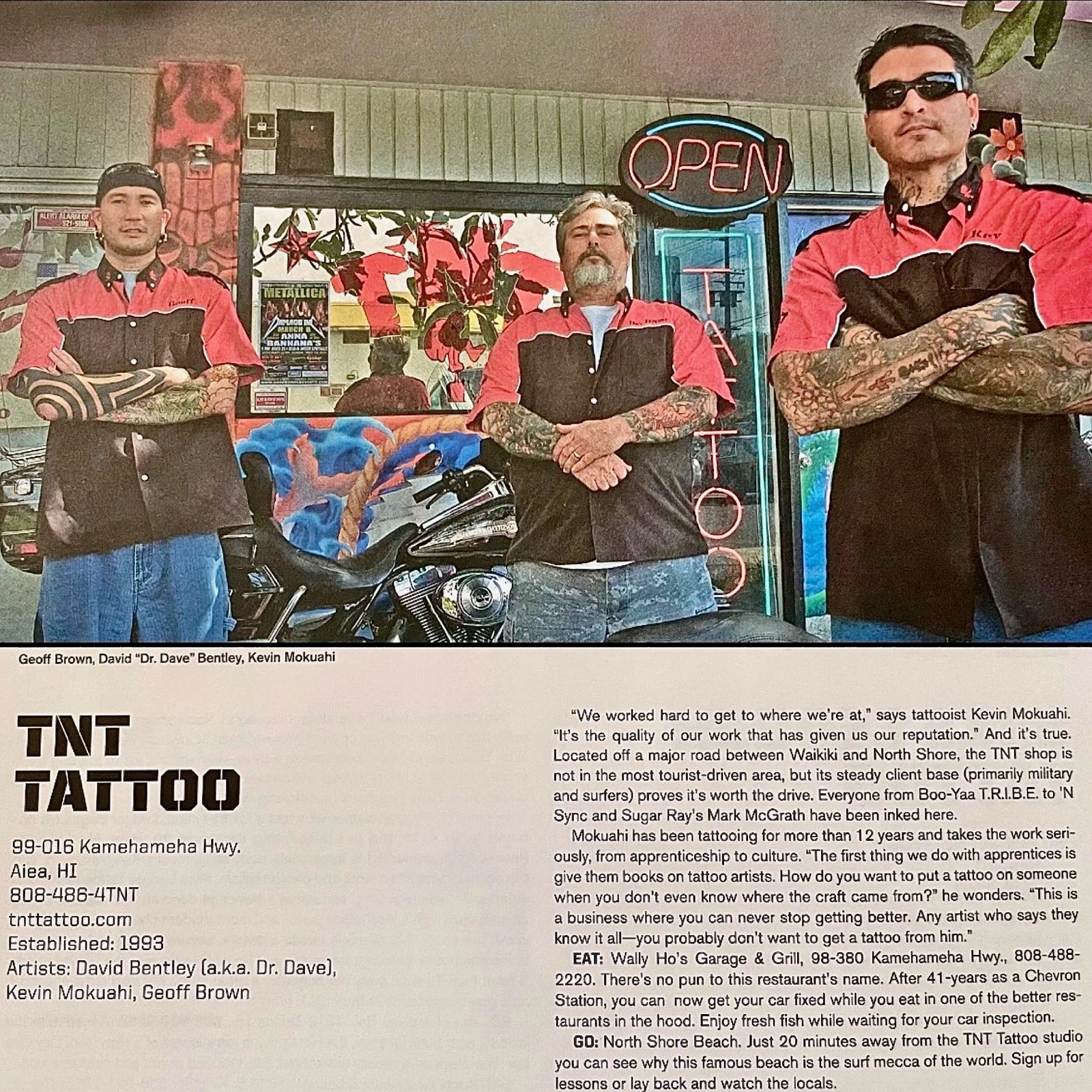
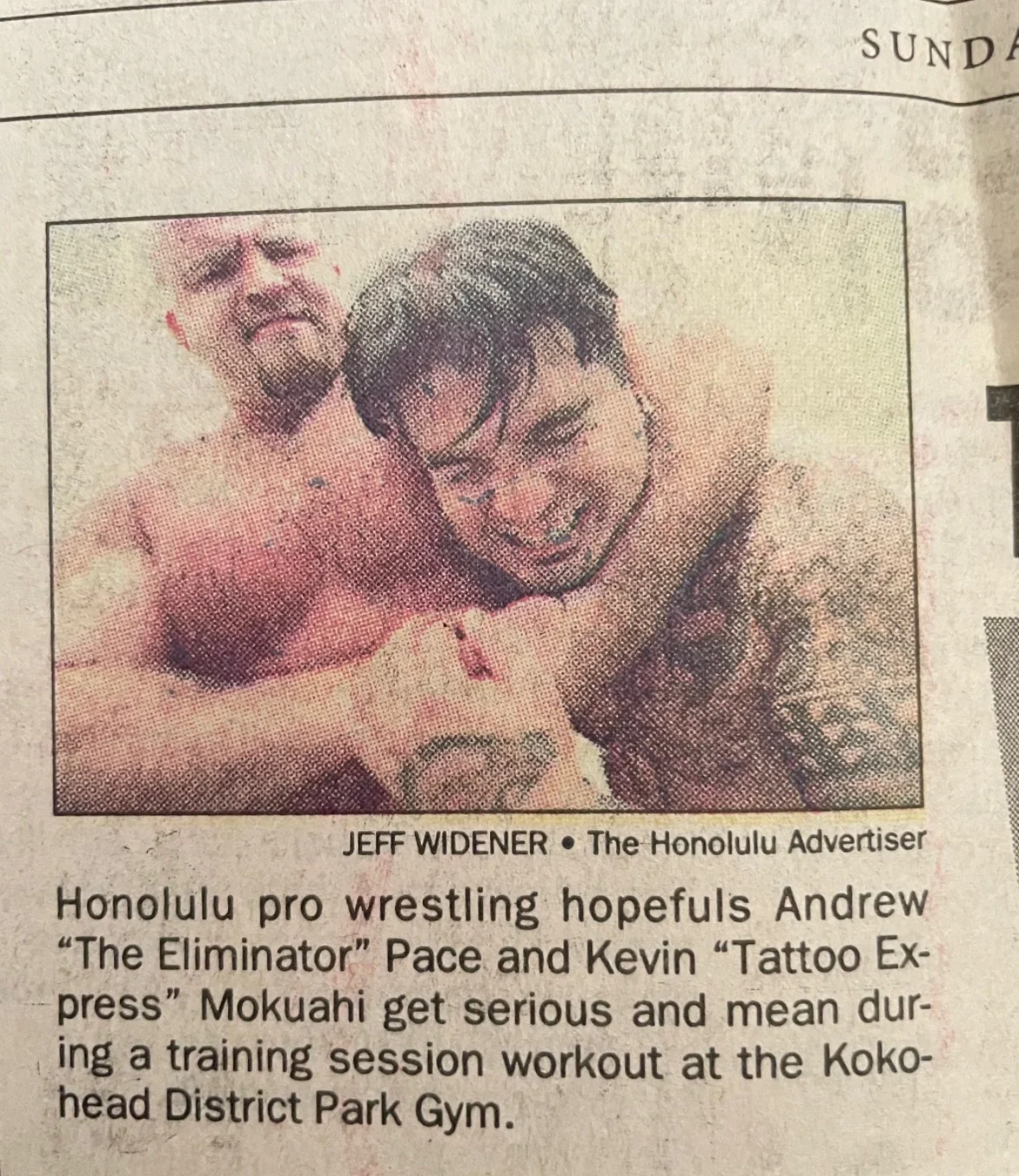
Long before he was at the bench that is now Sacred Art Waikiki, Kevin spent years building TNT Tattoo in Aiea — the same shop my family runs today. There's a magazine clipping from those years that I keep pinned at the front desk. Geoff Brown on the left. David "Dr. Dave" Bentley in the middle. Kevin on the right, sunglasses on, arms folded, the kind of pose that doesn't need to ask for the camera.

The pull-quote in the article reads: "We worked hard to get to where we're at. It's the quality of our work that has given us our reputation."

Then this — and you'll hear his philosophy in twelve words: "This is a business where you can never stop getting better. Any artist who says they know it all — you probably don't want to get a tattoo from him."

That's it. That's the whole creed. Most people in any trade — tattoo, otherwise — get to thirty-five years and start believing the lie that they have the trade figured out. Kevin has thirty-five-plus years on the needle and still talks about it like an apprentice. Still draws on his off days. Still goes home and works on flash he doesn't owe anyone. The discipline never softened. The hunger never left.

Chapter Three

Recent work.

He'll be the first to tell you the work has changed. The hands aren't what they were before Parkinson's. The pace is different. The discipline is the same.

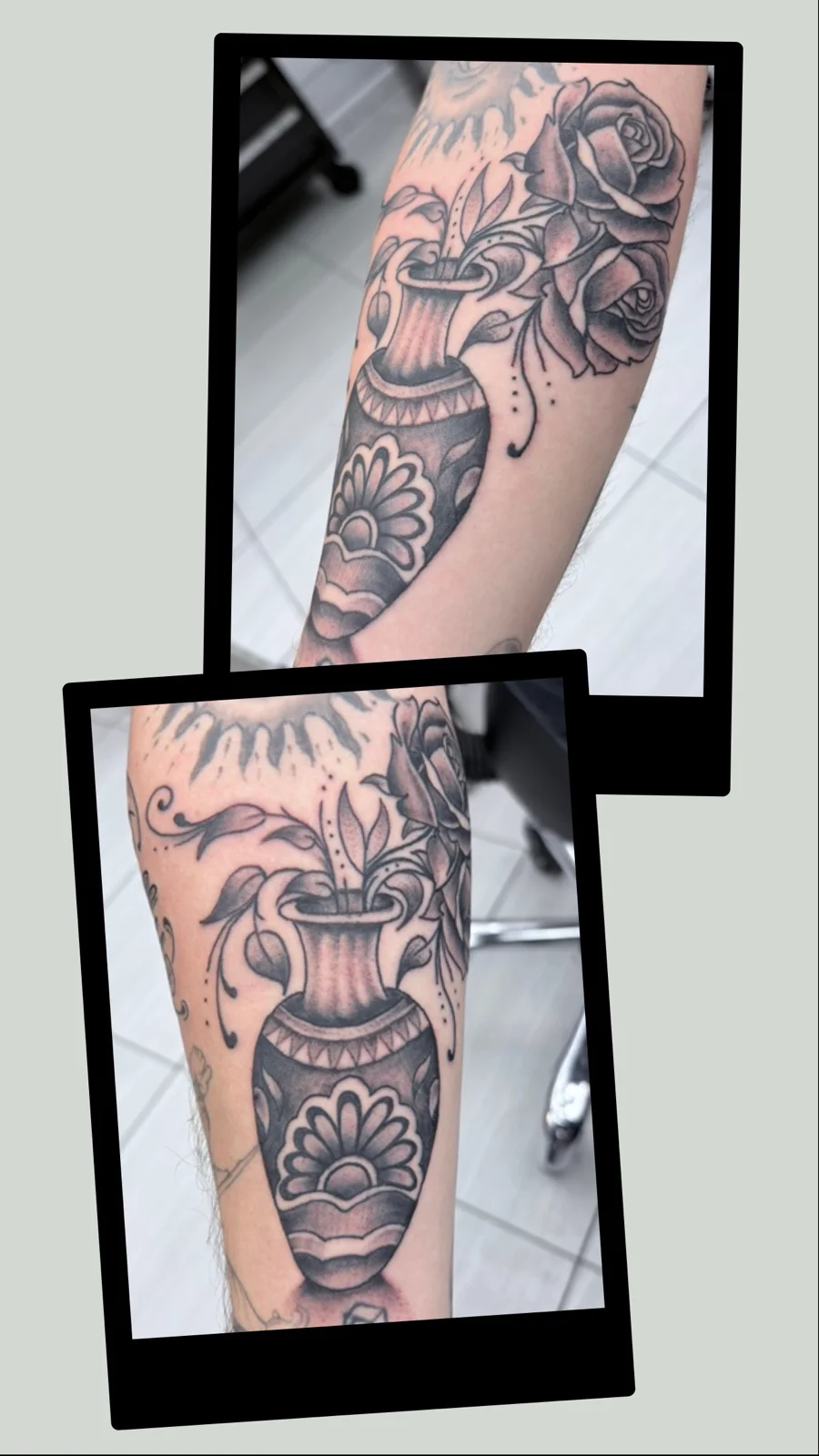
Most recent black and gray work by Kevin Mokuahi — vase with roses and ornamental flourishes
A recent piece — black-and-grey roses overflowing a hand-shaded vase. The kind of composition you can only build after thirty years of watching skin and ink age together.

Look at the work. The line weight is patient. The shading is restrained. The vase has the feel of something built with the eye more than the hand — the kind of design Kevin can render in his sleep because the design vocabulary has been inside him for forty years. He doesn't need to prove anything anymore. He has things to say with the needle, and he's saying them slower and more deliberately than he used to.

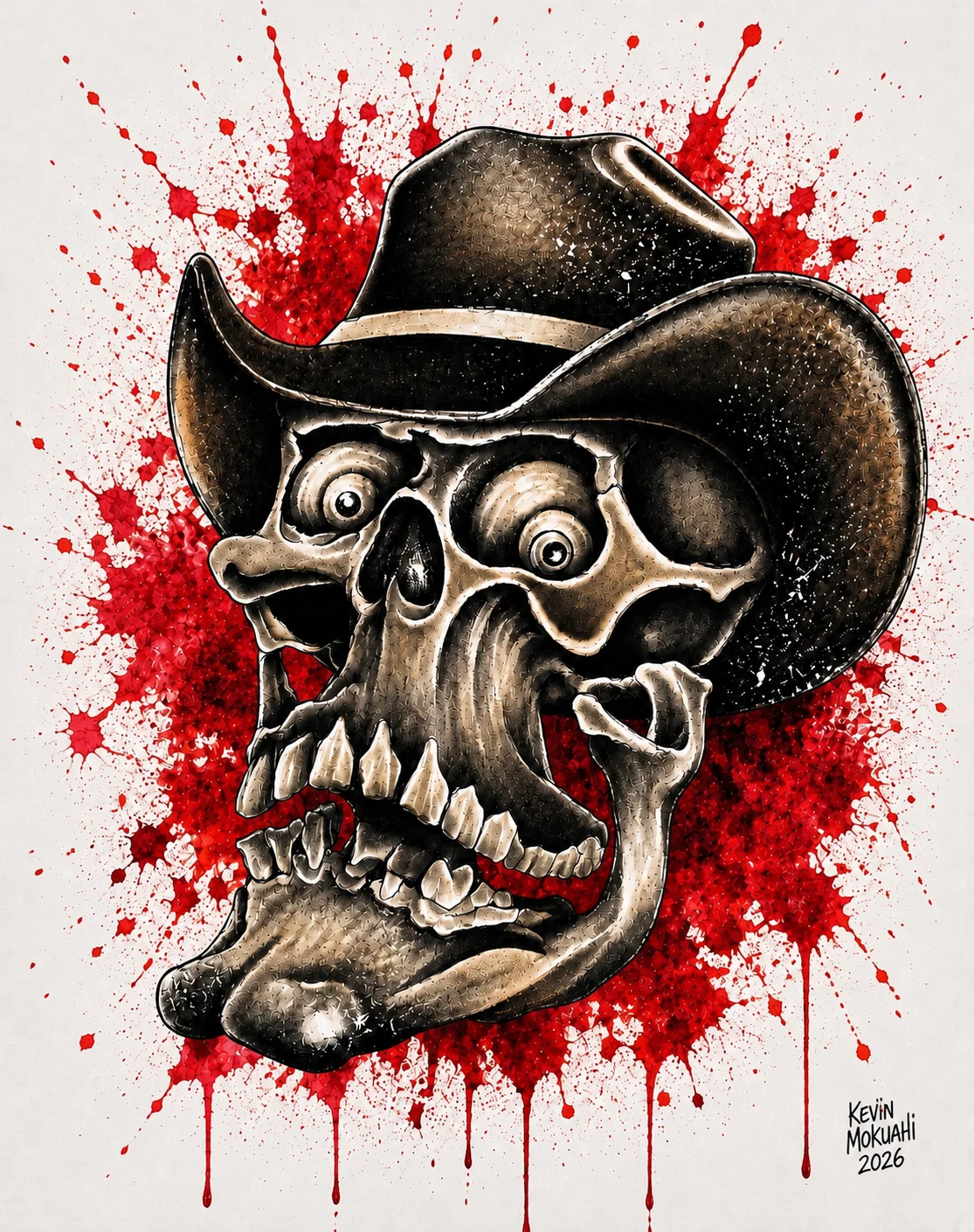
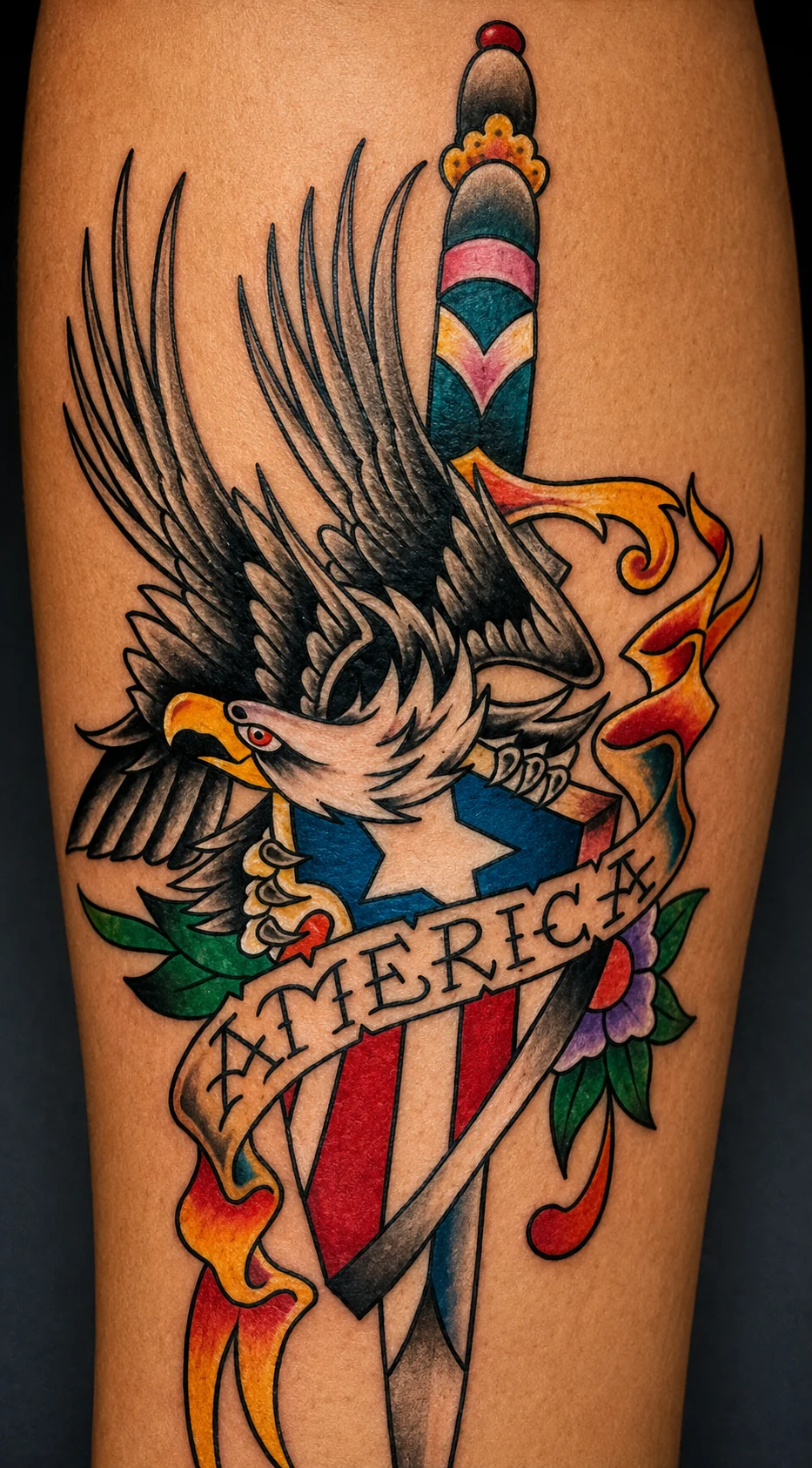
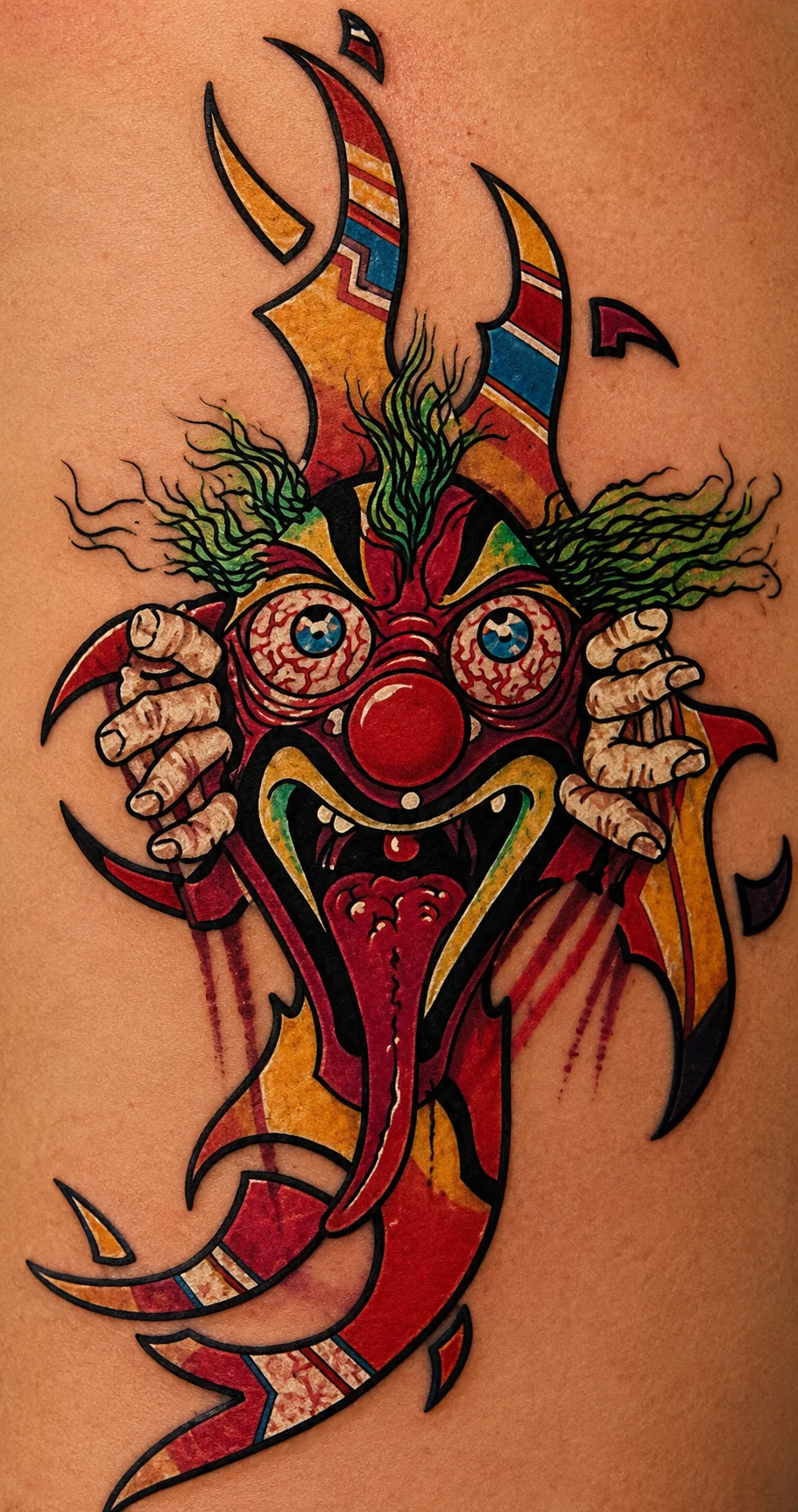
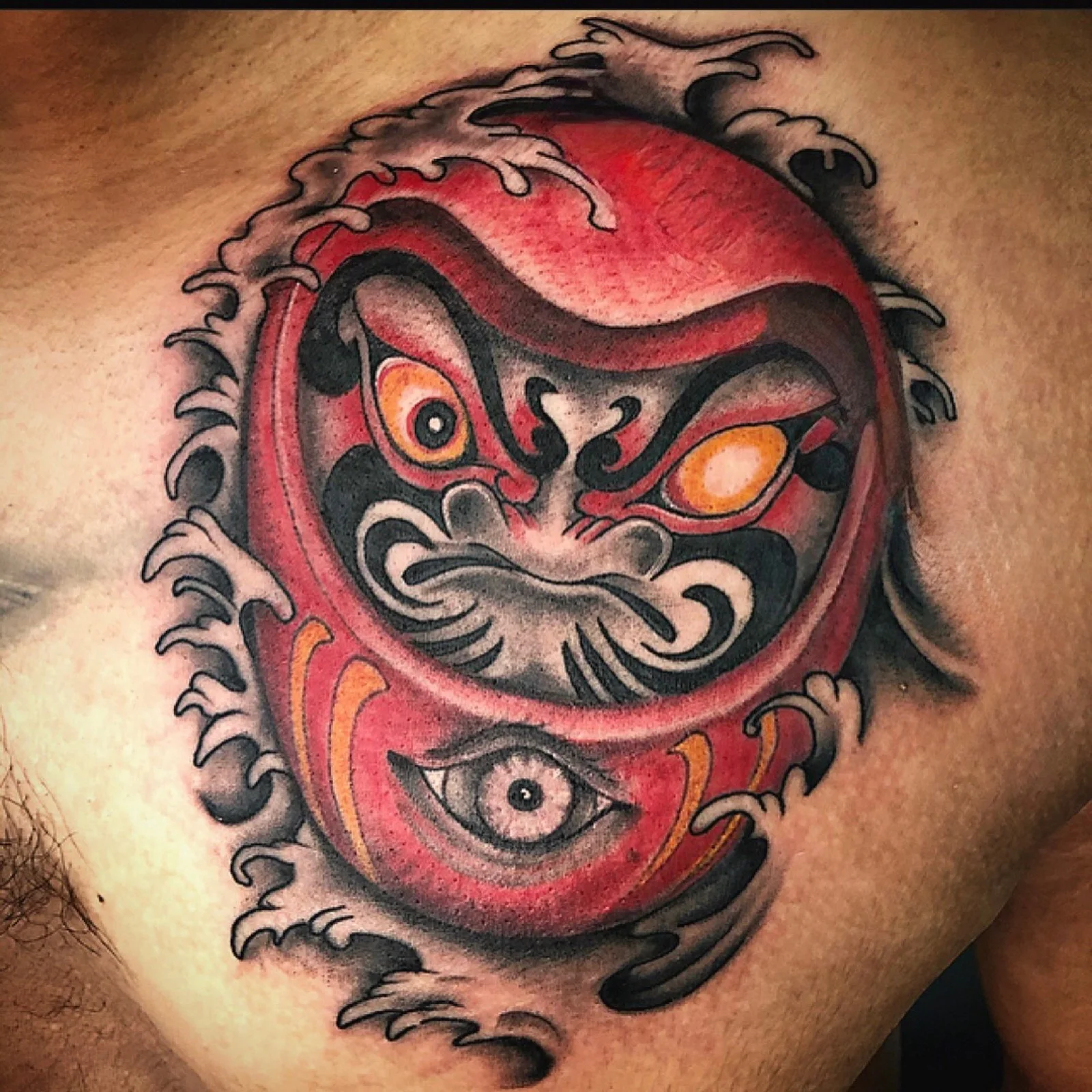
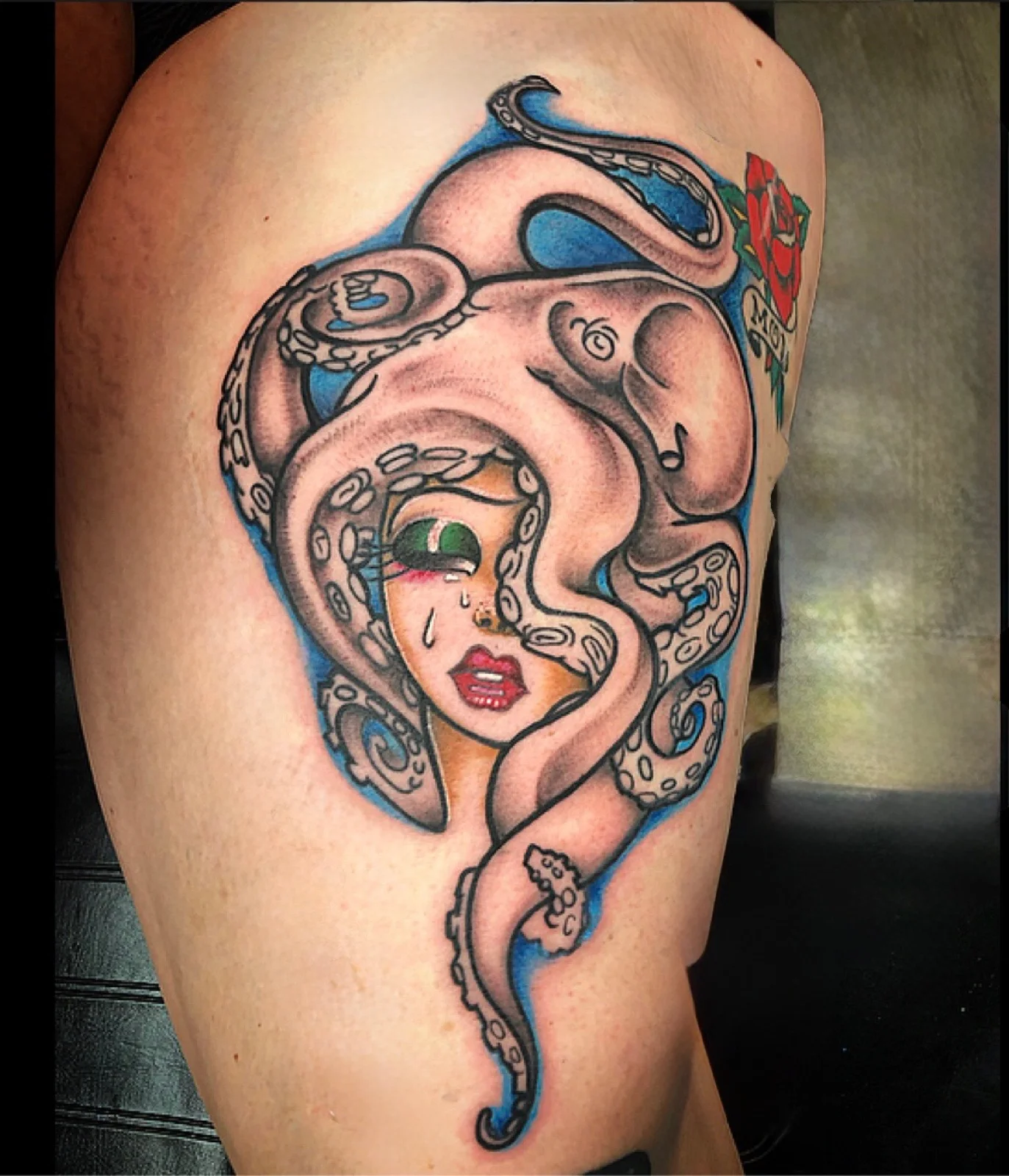
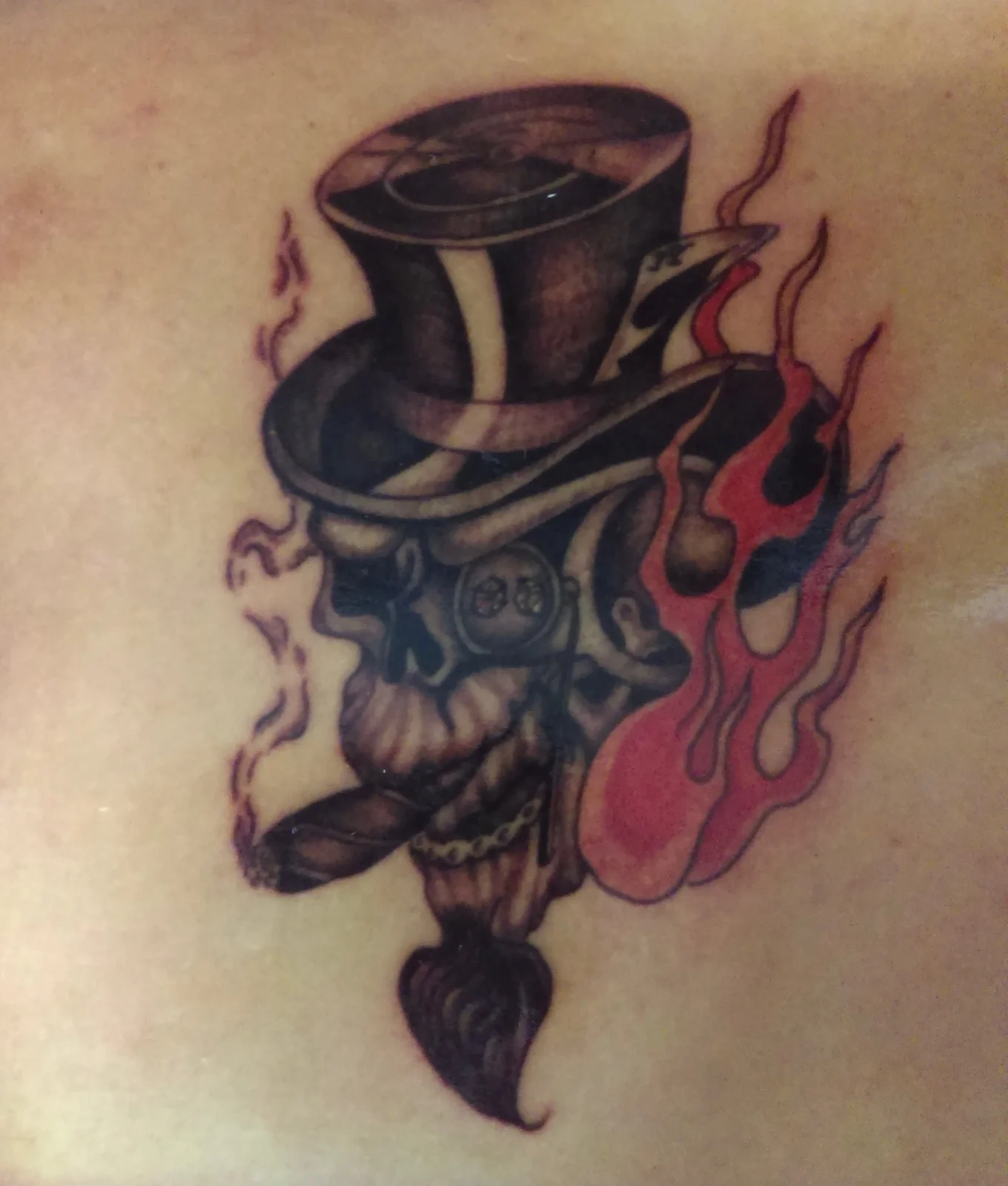
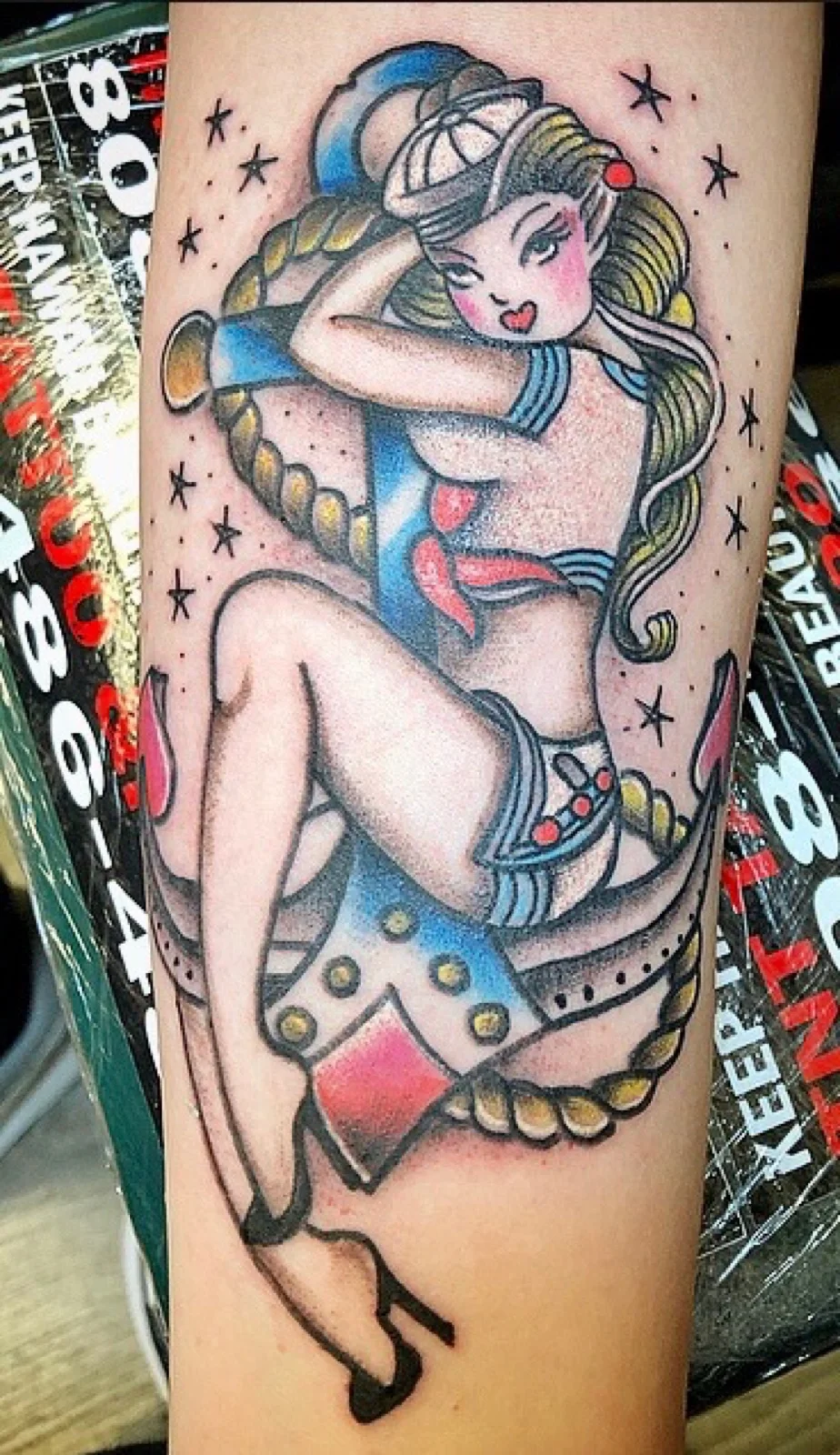
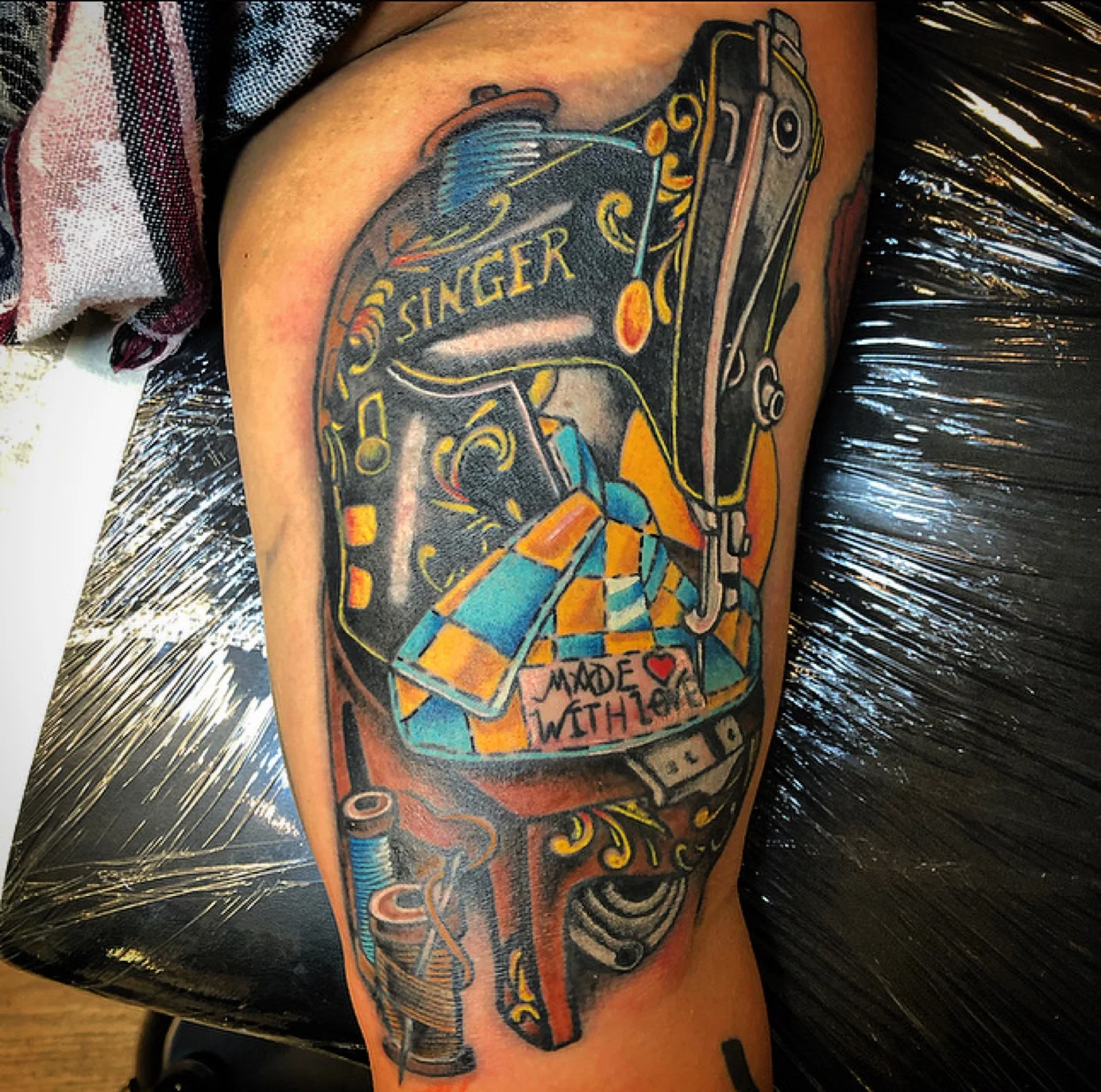
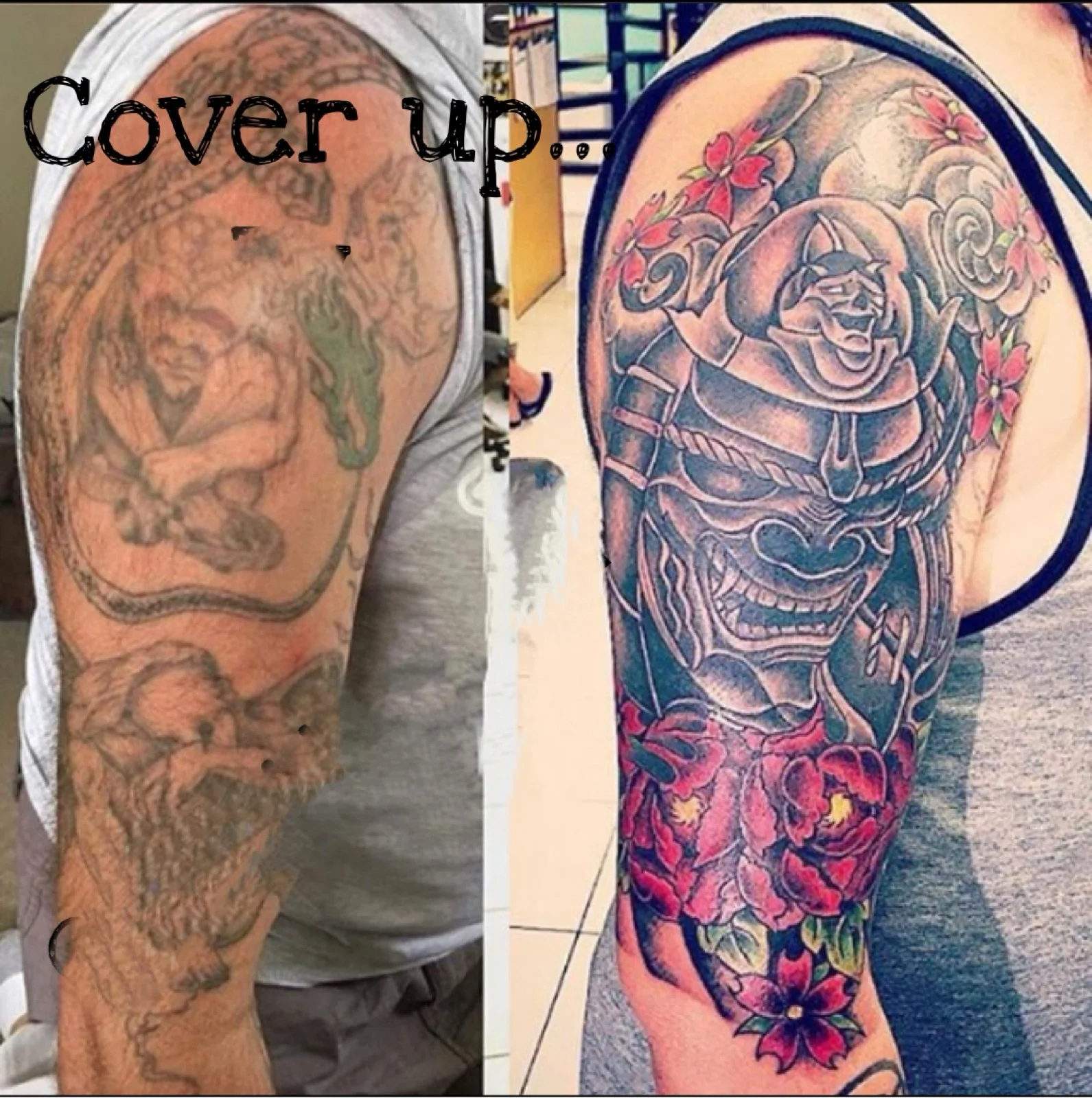
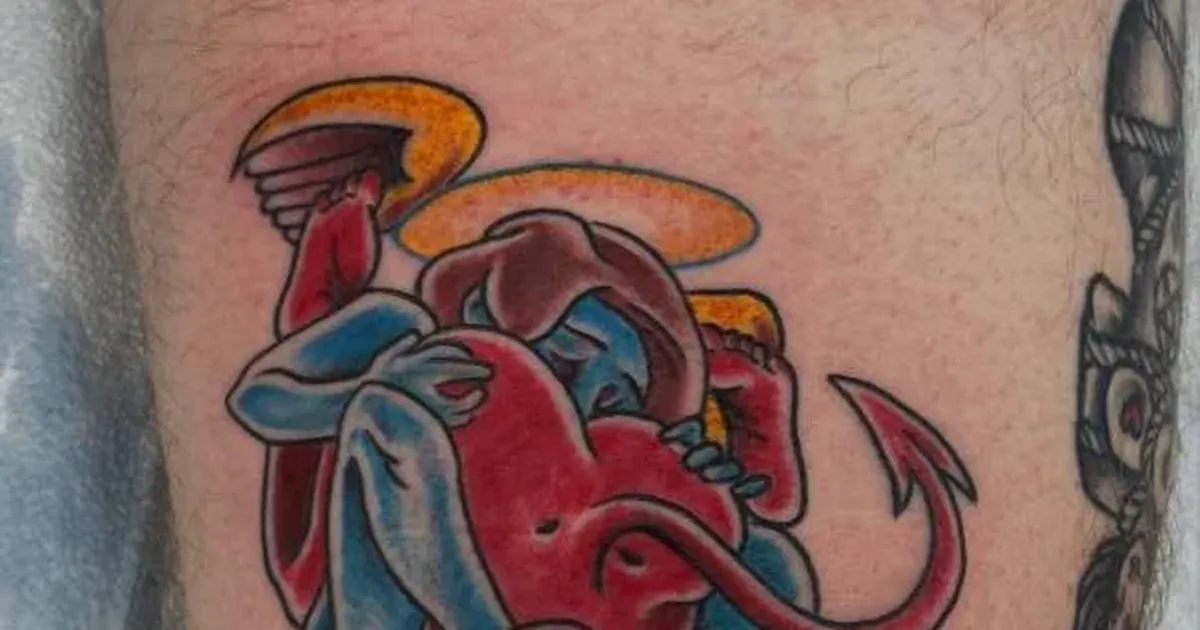
Past pieces from his archive — Daruma, octopus girls, top-hat skulls, sailor pin-ups, sewing-machine sleeves, full color Betty Boop cover-ups — read like a flash sheet of American + Japanese + Hawaiian-souvenir tattooing as Kevin lived it. He worked through every style the trade ran through over four decades. Most of it is still on people's skin, healed long ago, traveling on bodies all over Oʻahu and the world.

Chapter Four

His lovely lady.

Kevin's partner is the kind of person Kanoa describes — and I'll quote him directly here — as "such a blessing in not just his life but all of us that he blesses every day." Speak to anybody in the TNT family or the Sacred Art family for thirty seconds and the woman in Kevin's life will come up. She is, by all accounts, the steadying presence behind everything else this article describes.

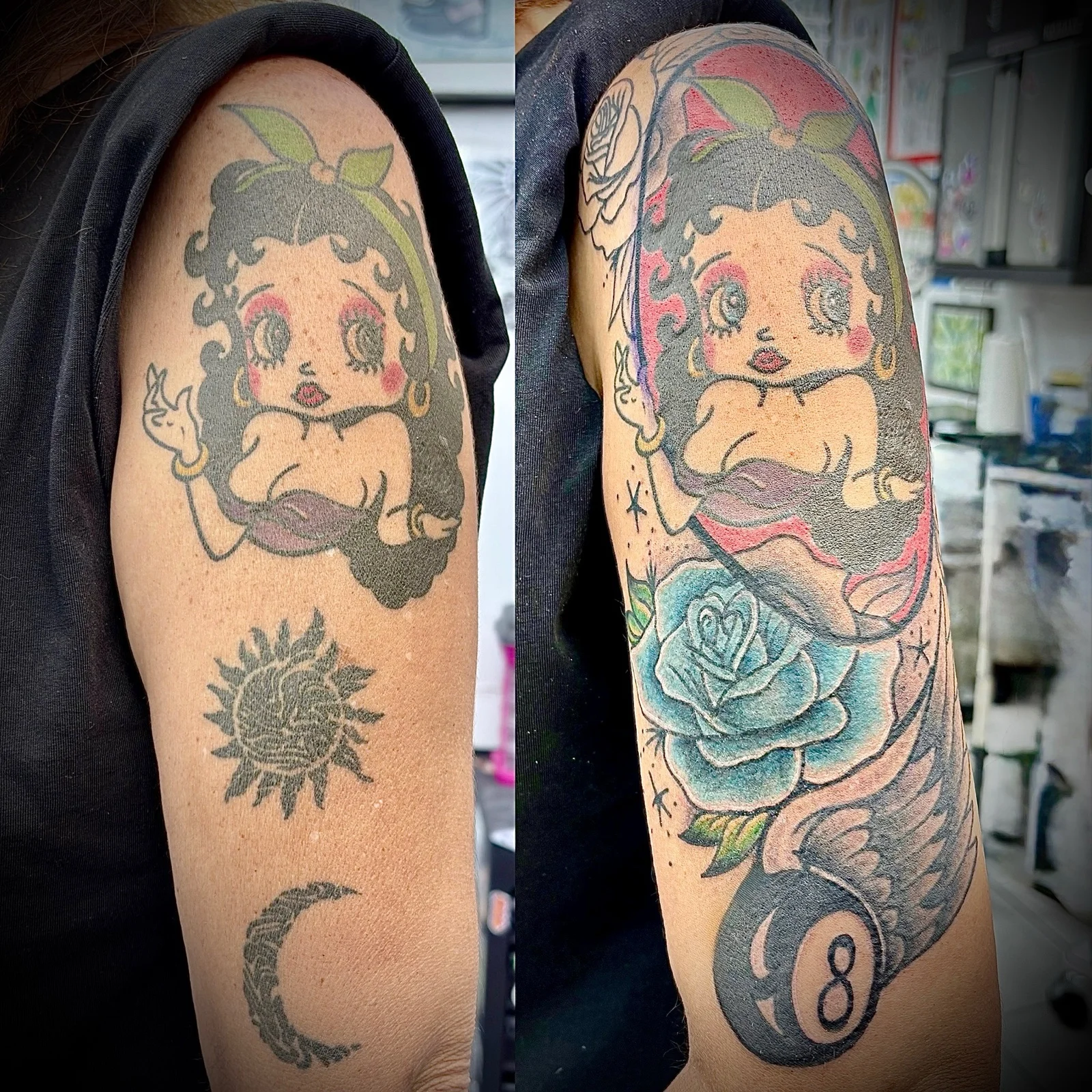
Before and after — Kevin Mokuahi's cover-up work on his partner: an aged Betty Boop piece refreshed with rose, eight-ball, and color saturation
A small before-and-after on his partner — an aged Betty Boop redrawn with saturated color, a rose, an 8-ball, and the kind of attention you only give the work that is going to live closest to home.

He tattoos her. That tells you something. The most-tattoo'd person in most tattoo artists' lives is the partner, and the work the artist puts there is the truest signal of what they think tattooing is for. Kevin's pieces on her are not flashy. They are bright, generous, finished. They look like gifts.

An Interlude

How you know he's thinking of you.

This is the part I don't know how to say without sounding sentimental, so I'll just say it.

You get a good-morning text from Kevin Mokuahi. A picture of nothing in particular — a pair of board shorts on a chair, sunlight coming through. Or just "Aloha" and a thumbs-up. It comes at six-thirty in the morning, before he rides, after he prays. It is a man telling you that he is awake and that you are someone he wants to greet on his way out the door.

A good morning message from Papamokes — the kind of small daily kindness the people closest to him talk about

I don't know what to call this except a discipline of love. He runs it on a schedule. He prays on the climb up the Pali. He texts the people he cares about. He goes to work. He coaches the kids at the canoe club. He pulls on the jersey that reads pedal for Parkinson's and gets back on the bike. Then he comes home, and the whole circuit starts over the next morning.
This is the thing nobody writes about when they write about him. The Star-Advertiser ran the Haleakala story — and they got the story right, as far as it went. What you can't put in a 600-word sports feature is the quieter math: this man is in your corner whether you know him well or barely at all.
Chapter Five

The picture at Duke's.

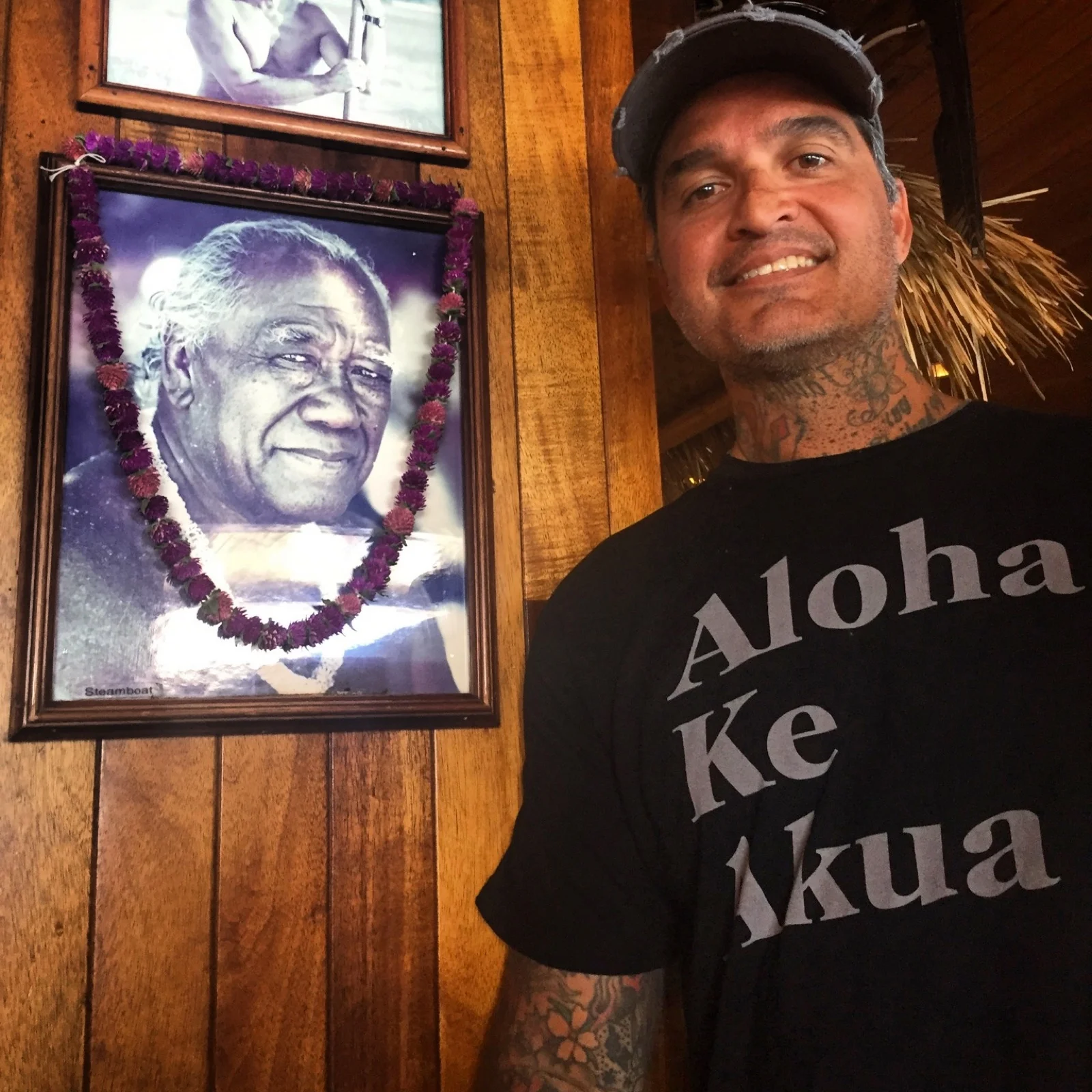
If you've ever eaten at Duke's Waikiki, you've probably walked past it without knowing. A framed portrait of an older Hawaiian man with a white lei around his neck, hanging on the wood-paneled wall. The plaque says Steamboat. That's Kevin's father.

Kevin will sometimes stand next to that picture and let somebody snap a photo. The two faces are unmistakably related. Same eyes. Same jaw line. Same posture toward the camera — relaxed, present, taking the room in rather than performing for it. Sam "Steamboat" Mokuahi Sr. was the Mayor of Waikiki, the beachboy alongside Rabbit Kekai and Duke Kahanamoku's circle, the man who took David Niven and Alan Ladd canoe-riding and had bit parts in The Old Man and the Sea. He died in 1998. His picture is still up at Duke's because Waikiki doesn't forget.

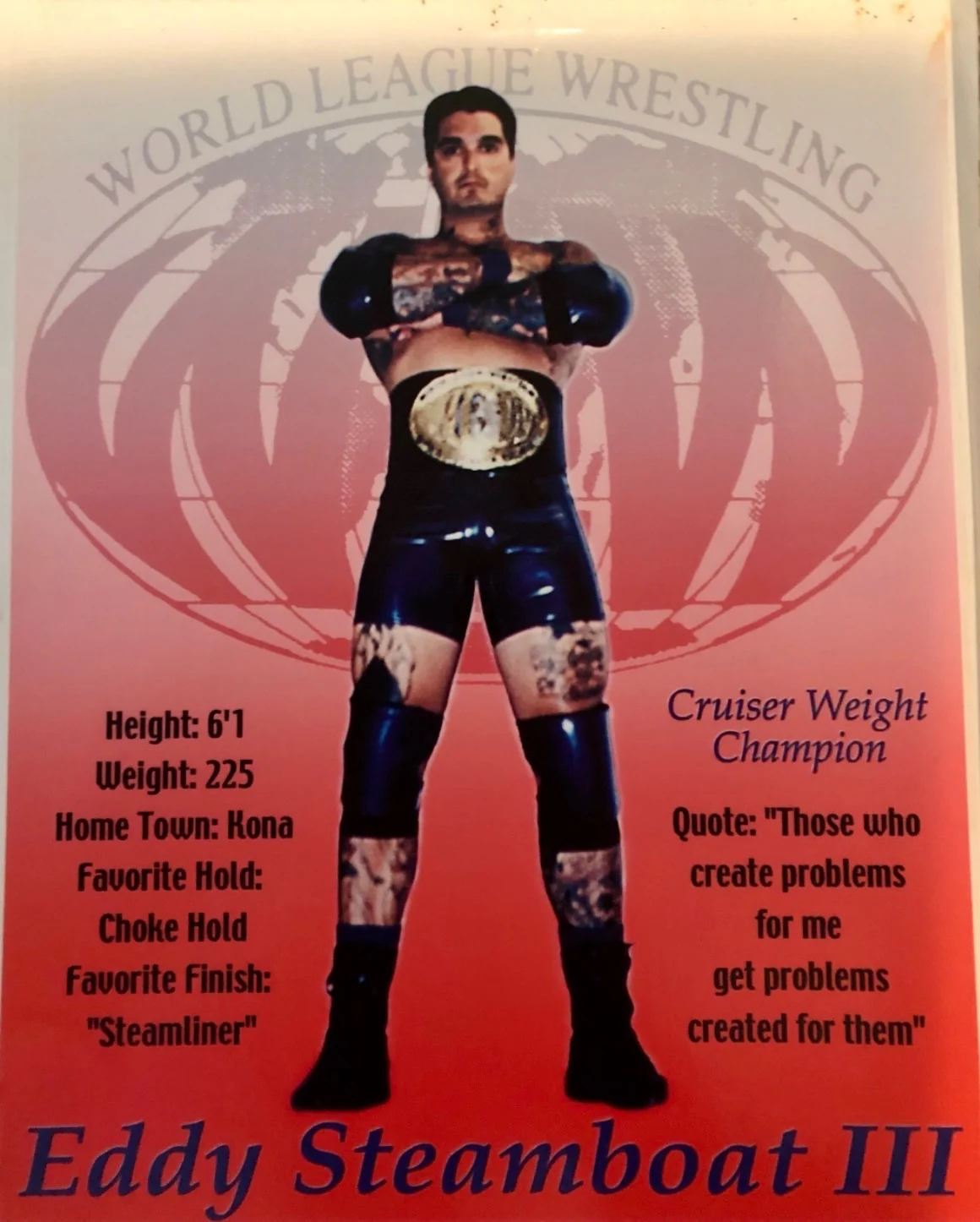
Kevin's older brother, Sammy "Steamboat" Mokuahi Jr., was a four-time NWA Hawaii Heavyweight Champion and the original "Steamboat" — Ricky Steamboat of WWE Hall of Fame fame took his ring name from Sammy because the family resemblance was that strong. Sammy retired and built outrigger canoes, coached Hui Nalu to a 1993 state championship, gave back to the kids the same way his father had given back to the tourists.

Kevin came up in that house. He grew up handing out surfboards on the Waikiki sand as a kid. He's coached at Lokahi Canoe Club for twenty-seven years, ran one of the strongest youth paddling programs in the state, and later co-founded Olelo O Keala at Sand Island with Pastor Chauncey of Word of Life. Three generations of Mokuahis pouring back into Hawaii in three different idioms — beachboy, wrestler / canoe builder, tattoo artist / cycling-evangelist-with-a-Pelican-case. Same gravity. Different work.

Chapter Six

The thing he won't let define him.

I'm putting this here because the article would not be honest without it, and because it matters for the June 27 event. But I'm putting it small because this is the part of his life Kevin refuses to let be the headline.

Twelve years ago, at around forty-five, he was diagnosed with early-onset Parkinson's. The doctors told him both jobs — the needle and the bike — would be almost impossible to maintain. He kept tattooing for another decade. He's still riding now. In June 2024, he climbed Haleakala — 36 miles, 10,000 vertical feet — with a jersey that read pedal for Parkinson's and a support team of Carl Brooks, Paula Bender, and Josh Gallardo behind him.

"It's not about me anymore."

He's said it in three separate news features now. The Star-Advertiser. Hawaii News Now. People who barely know him. He says it the same way every time, because he means it the same way every time. Watching him say it, you understand the Pelican case. You build something that lasts longer than the weather. Kevin built a life.

June 27, 2026

A day in his honor.

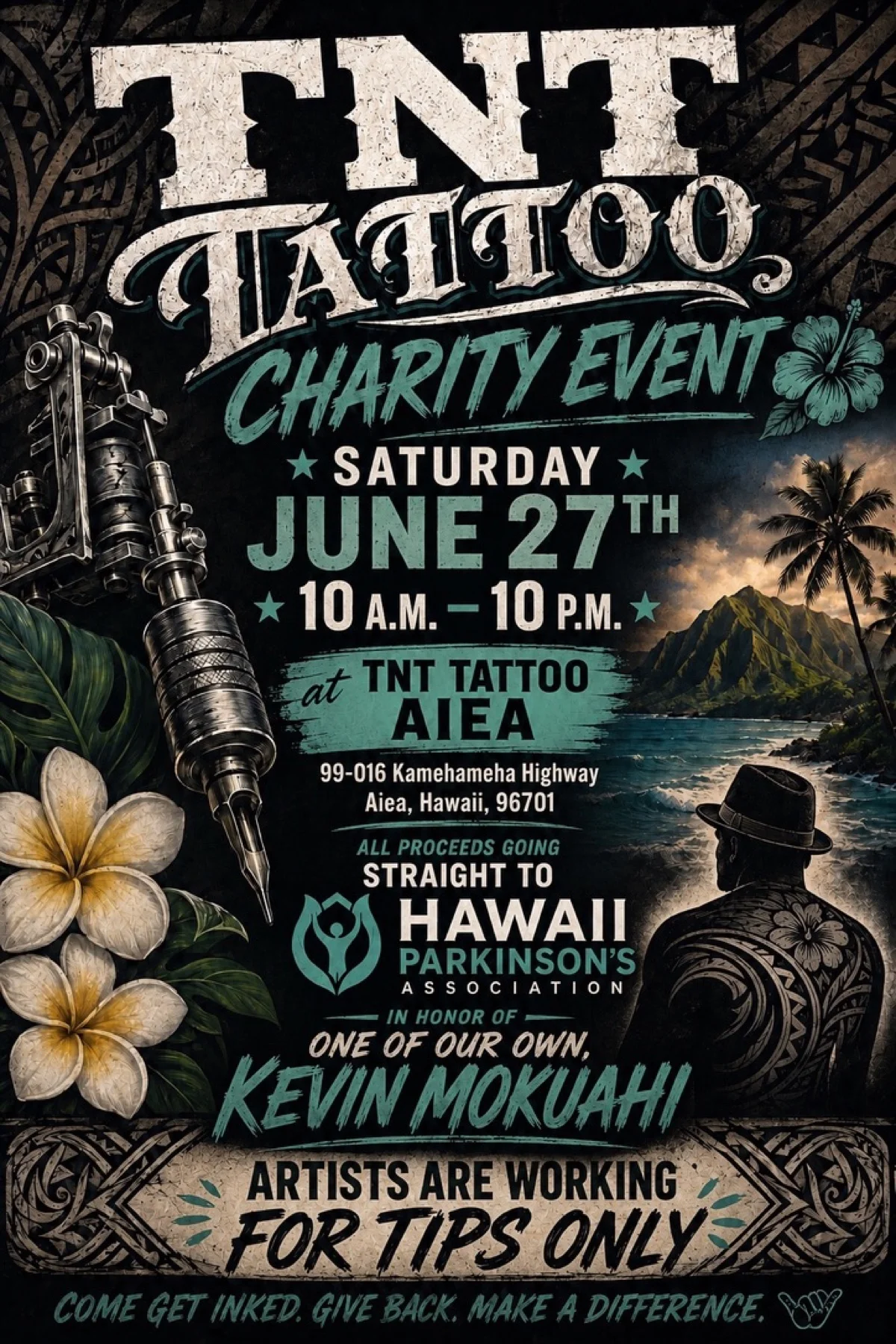
TNT Tattoo will close the books on Saturday, June 27, for twelve straight hours of charity work for the Hawaii Parkinson Association. Artists work for tips only. One hundred percent of tattoo proceeds go to HPA. We are holding it in Kevin's honor.

Truth: he didn't ask for it. He won't be comfortable with it. But he'll show up because the right people asked him to, and because by his own line — "It's not about me anymore" — he'll bend toward the cause every time.

→ See the Event Page

A Closing Note

What I've actually learned from him.

I've been around tattoo shops my entire adult life. I've run one for years. I have met every kind of man this trade can produce — the showmen, the technicians, the burnouts, the apprentices who never grew up, the elders who turned bitter when the spotlight moved on. Kevin doesn't fit any of those categories. He's not bitter. He's not chasing relevance. He's not asking the trade to tell him he matters.

The relationship I've built with this man in just this short time is beyond words. I have never met a stronger man who carries adversity the way he does — quietly, without complaint, without making it the other person's burden — and is at the same time this humble. The fortunate few who get a chance to learn from him pick that up by osmosis. You don't take notes. You watch him. You start showing up the way he shows up.

Some people learn the trade. Kevin teaches the posture you're supposed to wear while you learn it. Show up. Be of use. Be kind to the next person who walks in. Laugh while you do it. Trust that the rest will get sorted.

That's the inheritance. That's why the page is here. That's why we close the shop on June 27. That's why everyone in this story — the celebrities, the canoe-club kids, the new clients who get a good-morning text out of nowhere, the woman who came back twenty years later for her second tattoo — keeps Kevin's name in their mouth.

He has a Pelican case. He has a faith. He has a wife who lights up his life. He has a son following the trade. He has the picture of his father on the wall at Duke's. He has the Haleakala climb behind him and a million descents ahead.

Some men carry a briefcase.
Papamokes carries a Pelican case.

— Kanoa Wilson, TNT Tattoo · 2026

"I'm wealthier now than I've ever been."

— Kevin Mokuahi · Honolulu Star-Advertiser, June 9, 2024